
Pack N Plays make life easier for busy parents, but figuring out where your little one should sleep inside one can feel confusing.
Yes, your baby can nap or sleep overnight in the bottom of a Pack N Play — as long as it’s set up the right way, with a firm mattress and nothing extra inside.
In this article, we’ll walk you through exactly how to make that bottom sleep space safe, what to watch out for, and when it’s the better choice over other attachments.
Quick Key Points
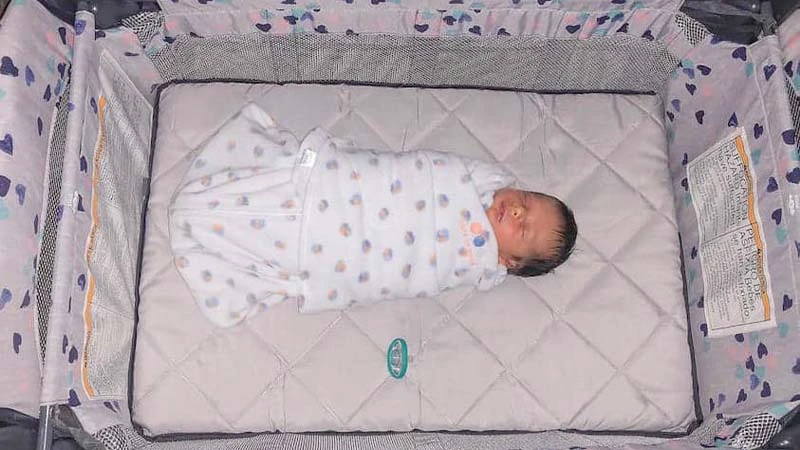
- Yes, it’s safe — the bottom level of a Pack N Play is generally the safest sleep spot and is rated for the full weight range, unlike raised attachments.
- Use only the factory mattress, laid flat with no extra padding, pillows, or loose bedding, and always place baby on their back.
- Check the weight/height limit (usually around 30 lbs / 35 inches) and stop bottom-level sleep once your baby can climb or pull to stand.
- Never use the changing table or extra cushions for sleep—only the bassinet attachment (for newborns) or the bottom level are rated for it.
How To Make Pack And Play A Safe Sleep Environment?
Before placing your baby down for a nap or overnight sleep, it helps to think of the Pack N Play the same way you’d think of a crib. The same core safe-sleep rules apply:
- Always lay your baby down on their back, not their stomach or side.
- Use only the mattress or pad that came with the unit—never add a second mattress, extra padding, or a memory-foam topper.
- Keep the sleep space bare: no pillows, blankets, bumpers, stuffed animals, or loose sheets.
- Set the Pack N Play up on a flat, hard floor, never on a soft surface like a bed, sofa, or thick rug.
- Make sure the unit is fully locked and extended, with the mattress at its lowest, flattest setting.
- Dress your baby in a properly sized sleep sack or wearable blanket instead of loose bedding to manage room temperature.
Following these basics turns a simple portable playard into a genuinely safe sleep environment, whether you’re at home or traveling.
Safety Factors to Know About Sleeping in a Pack-N-Play
Not every Pack N Play is built the same, and not every part of it is meant for sleep. Check these factors before using one as a sleep space.
Height and Weight
Every Pack N Play has a manufacturer-listed height and weight limit for safe sleep use. Most brands recommend stopping use once your baby reaches around 30 pounds or about 35 inches tall, or as soon as they can pull themselves up to standing and try to climb out—whichever happens first. Check your model’s manual, since limits vary slightly by brand.
Material
Look for a sturdy frame with breathable mesh side panels. Mesh walls let air circulate and let you see your baby clearly, while also preventing rolling or getting wedged against a solid side.
Avoid any add-on padding that the manufacturer doesn’t sell, since aftermarket padding can create soft spots that aren’t firm enough for safe sleep.
Safety Lock
A working locking mechanism is non-negotiable. The legs and frame need to click firmly into place so the sides can’t accidentally collapse while your baby is inside. Before every use, give the frame a gentle shake test to confirm it’s locked.
Bed Pan or Mattress
The mattress or pad at the bottom should be firm, flat, and tightly fitted to the frame with no gaps around the edges.
A too-soft or sagging mattress increases suffocation risk, so use only the factory-supplied pad, and replace it if it becomes worn, dented, or no longer sits flush.
Cover
If you use a sheet or mattress cover, it must be specifically designed for your Pack N Play model and fit snugly with no loose fabric.
Avoid regular crib sheets unless the manufacturer confirms they’re compatible, since an ill-fitting sheet can bunch up and become a hazard.
Wheels
Some Pack N Play models come with wheels for easy moving around the house. If yours has wheels, always lock them in place before your baby goes inside, especially during sleep, so the unit can’t roll unexpectedly.
Safety
Beyond the mattress and frame, a few general precautions go a long way. Keep the Pack N Play away from window blind cords, curtains, wall-mounted decor, and electrical cords your baby could reach.
Don’t hang toys, mobiles, or diaper-stacker organizers from the top rail once your baby can push up or grab.
If you have pets, keep them out of the sleep space, and always use a video or audio monitor so you can check on your baby without disturbing their sleep.
Flat Surface
Always set the Pack N Play up on a level, hard floor. Carpeted floors are fine as long as the frame sits evenly and no gap allows a baby’s head or limb to get trapped between the mattress and the frame. Never place it on an incline, a thick rug, or an uneven surface.
Manufacturing Date and Safety Standards
Baby gear safety standards are updated regularly, and older Pack N Plays may not meet current guidelines.
Check that your unit meets current safety certification standards, and check for any recall notices tied to your model and manufacturing date before using it for sleep. If you’re using a hand-me-down or secondhand unit, this step matters even more.
Pack N Play Bottom Sleepers – Choose Your Baby Sleeping Place!

Once you’ve confirmed the unit is safe, the next question is where your baby should actually sleep inside the Pack N Play. For most babies, especially once they outgrow the bassinet attachment or start rolling over, the bottom level of the Pack N Play is the recommended sleep spot.
It sits low to the ground, has tall mesh walls on all sides to prevent rolling out, and uses a firm, flat mattress designed specifically for sleep. This makes it a safer long-term option than raised attachments, which are only rated for smaller, lighter babies.
Which Pack-N-Play Attachments Can a Baby Sleep In?
Not every part of a Pack N Play is built for sleep, even if it looks comfortable.
Here’s a breakdown of common attachments and whether they’re appropriate.
Additional Pack-N-Play Cushions
Extra cushions or padded inserts sold separately from the main unit are not recommended for sleep. They can shift, bunch up, or create a soft surface that raises suffocation risk. These are best reserved for supervised playtime only, never for naps or overnight sleep.
Bassinet Insert
Many Pack N Plays come with a removable bassinet insert designed for newborns, usually rated up to around 15 pounds.
It sits higher up, closer to the top rail, making nighttime feeds and check-ins easier. Once your baby approaches the weight limit or starts trying to roll over, move them down to the bottom level.
Bassinet Attachment
Like the insert, a full bassinet attachment clips onto the frame and provides padded, elevated sleep space for very young infants.
It’s safe to use within its listed weight and age range, but remove it entirely—not just leave it folded up—once your baby outgrows it, since it isn’t designed to hold an active, mobile baby.
Bottom Level
As covered above, this is the main sleep surface and the safest, longest-lasting option. It’s rated for the full weight range of the Pack N Play and has the tallest, most secure walls.
Changing Table
Some Pack N Play models include a snap-on changing table attachment. Use this only for diaper changes under direct supervision, and never use it as a sleep surface.
It isn’t rated to bear a baby’s full weight for extended periods and doesn’t have the safety structure of an actual sleep surface.
Can a Baby Sleep in a Playpen Overnight?
Yes. A Pack N Play (playard) can safely be used as your baby’s regular overnight sleep space, and many pediatric guidelines support this as long as you follow standard safe-sleep practices — back sleeping, a firm flat mattress, no loose bedding, and a fully locked frame.
Some parents on parenting forums, including threads on communities like r/BabyBumps, mention using a Pack N Play as their baby’s main crib substitute for months without issues, precisely because it meets the same core safety criteria as a crib when set up correctly.
How Do You Put a Baby to Sleep in a Pack-and-Play?
- Set the Pack N Play up fully, make sure all sides are locked, and check that the mattress sits flat with no gaps.
- Remove any bassinet attachment, changing table, or extra padding if your baby is sleeping on the bottom level.
- Dress your baby appropriately for the room temperature—a sleep sack works well instead of loose blankets.
- Lay your baby down on their back, in the center of the mattress.
- Keep the sleep space completely clear of toys, pillows, and stuffed animals.
- Place the Pack N Play in your room (or nearby) for at least the first several months, per general pediatric sleep guidance, and keep the room at a comfortable, moderate temperature.
Can a Two-Year-Old Sleep in a Pack and Play?
In most cases, yes, as long as your toddler is still within the manufacturer’s height and weight limits—typically around 30–35 pounds or 35 inches, though this varies by model.
Once your two-year-old can climb out on their own, stand and rock the frame, or has clearly outgrown the space, it’s time to transition to a toddler bed for safety, regardless of the official age or weight cutoff.
How Can Baby Sleep At the Bottom Of Pack N Play? Is It Safe?
Putting it all together: yes, the bottom of a Pack N Play is a safe, pediatrician-supported sleep space for babies, from the newborn stage through toddlerhood, provided you:
- Use only the factory mattress and cover
- Keep the space free of loose bedding, pillows, and extra padding
- Always place your baby on their back
- Confirm the frame is fully locked and set up on a flat, hard surface
- Stay within the listed height and weight limits
- Check that the unit meets current safety standards and hasn’t been recalled
Set up this way, the bottom level is the most stable and long-lasting sleep option a Pack N Play offers—more so than any raised attachment.
Conclusion
A Pack N Play is one of the most versatile pieces of baby gear you can own, and the bottom level, when set up properly, is a genuinely safe place for your baby to sleep—whether that’s a quick nap at home or a full night’s sleep while traveling.
The key is sticking to the basics: a firm, bare mattress, back sleeping, a fully locked frame, and staying within the manufacturer’s weight and height limits.
Skip extra padding and attachments not rated for sleep, watch for recalls, and your Pack N Play can safely serve as your baby’s go-to sleep spot for months, or even years, to come.