
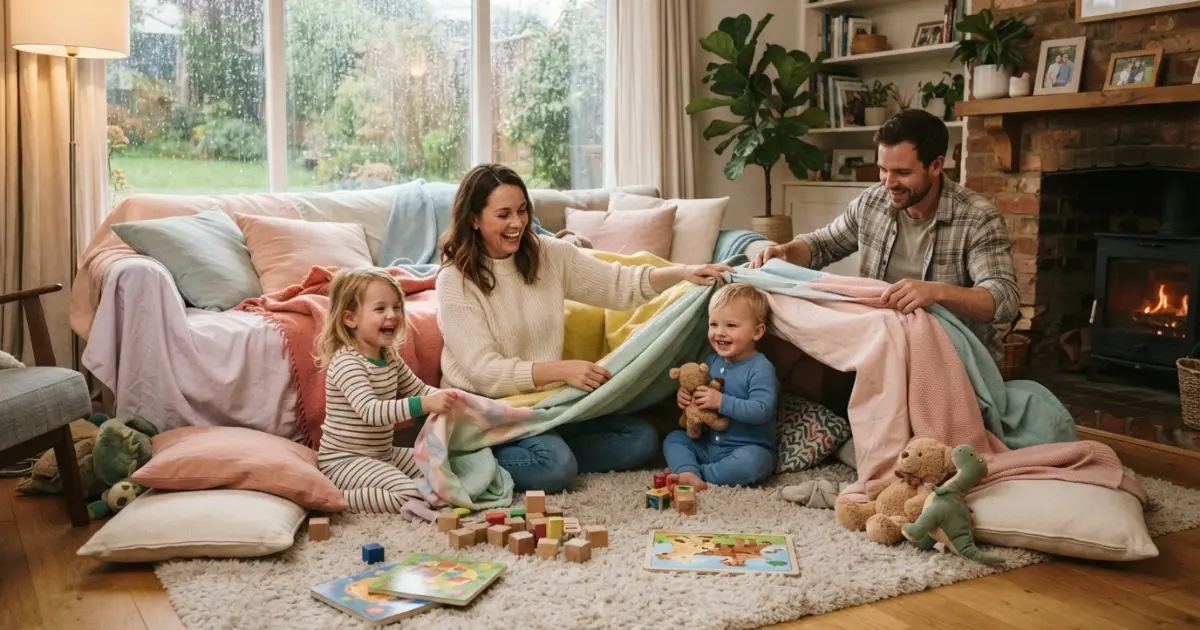
Rain doesn’t have to ruin a fun day with your kids. A little planning can turn a gray, boring afternoon into hours of laughter and creativity right at home.
Parents often struggle to keep kids busy once the rain starts. The right activities keep everyone happy, active, and screen-free—without expensive toys.
In this article, we share 30+ fun, easy rainy day activities for kids of every age, from toddlers to school-age children. You’ll find creative games, learning ideas, and simple tips to make rainy days stress-free for the whole family.
What to Do with Kids on a Rainy Day?
When the sky turns gray, kids often feel stuck and restless indoors. The good news is that you don’t need fancy toys or a big budget to keep them happy. A cozy blanket fort, a box of crayons, or even a few kitchen bowls can spark hours of fun.
The key is to mix things up—combine quiet activities with active ones, and creative play with learning moments. This way, kids stay engaged, parents get a little peace, and the whole family makes the most of a slow, rainy day at home.
Rainy Day Activities for Toddlers (1–3 Years)
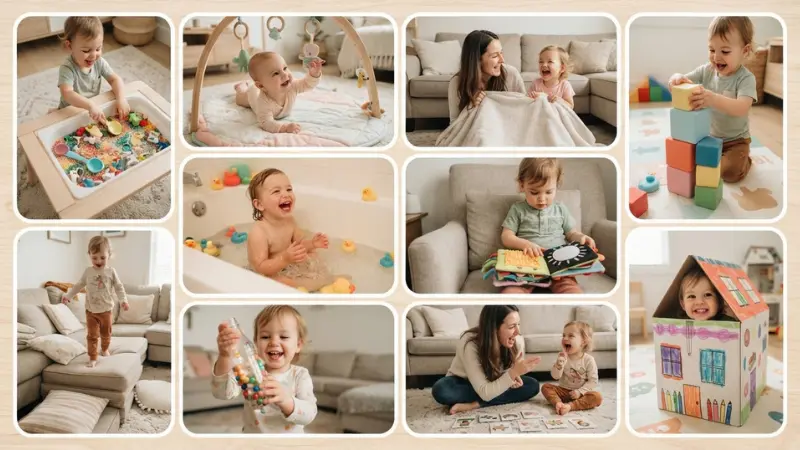
Sensory Bins
Fill a plastic bin with rice, dried pasta, or soft pom-poms and let your toddler dig in with small cups and spoons.
This hands-on play helps build fine motor skills and keeps little hands busy for a long time. Add small toys or letters inside for extra discovery. It’s messy, but the cleanup is worth the smiles.
Tummy Time Games
For babies still working on tummy time, place a colorful toy just out of reach to encourage stretching and reaching. Get down on the floor with them and make funny faces or sounds to keep it fun.
Short, frequent sessions work best. This simple activity builds neck and core strength early on.
Peekaboo
This timeless game never gets old for toddlers. Hide behind a blanket or your hands and pop out with a cheerful “peekaboo!”
Toddlers love the surprise and will often ask for it again and again. It’s a great way to build trust and social connection through simple, joyful repetition.
Soft Block Stacking
Give your toddler soft foam or wooden blocks and let them build towers—then knock them down! This activity teaches balance, patience, and cause-and-effect thinking.
It also keeps them entertained for long stretches, especially if you cheer along with every new tower height.
Bath-Time Play
A rainy afternoon is perfect for some extra bath-time fun. Add cups, floating toys, or plastic boats and let your toddler splash and pour to their heart’s content.
Bath play builds sensory awareness and gives toddlers a safe space to explore water in a controlled way.
Texture Books
Soft cloth or board books with different textures—fuzzy, bumpy, smooth—keep toddlers curious and engaged. Reading together also builds early language skills and gives you a calm, cozy moment to bond. Let your toddler touch and explore each page at their own pace.
Indoor “Nature” Walk
Set up a mini indoor walk using couch cushions as stepping stones or a hallway as a path. Talk about colors, shapes, or animals along the way. This playful pretend adventure keeps toddlers moving safely indoors while sparking their imagination.
Musical Shakers
Fill small, sealed containers with rice or beans to make simple shakers. Turn on some music and let your toddler shake along to the beat. This activity supports rhythm, coordination, and pure rainy-day joy.
Copycat Animal Sounds
Sit face-to-face with your toddler and take turns making animal sounds and movements, like hopping like a bunny or roaring like a lion. This simple game builds imagination and language skills while giving you both plenty of giggles. It needs no supplies, making it perfect for a sudden downpour.
Cardboard Box Play
An empty cardboard box can become a car, a boat, or a cozy little house in a toddler’s imagination. Cut a simple window or door, add some crayon drawings, and let them crawl in and out. This low-cost activity turns leftover packaging into hours of pretend play.
Rainy Day Activities for Preschoolers (3–5 Years)
Indoor Obstacle Course
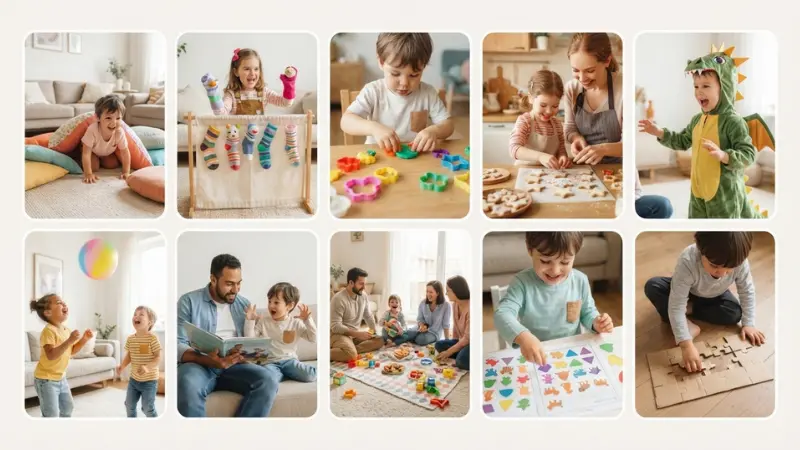
Use pillows, chairs, and blankets to build a fun obstacle course through the living room. Kids can crawl under tables, jump over cushions, or balance along a “line” of tape on the floor.
This activity burns energy safely indoors and gives preschoolers a great sense of accomplishment.
Puppet Shows
Grab some socks, paper bags, or store-bought puppets and help your child put on a show. Encourage them to make up voices and stories for each character.
Puppet play builds confidence, storytelling skills, and creativity—and it’s fun to watch, too.
Playdough Creations
Playdough is a rainy-day classic for good reason. Give your preschooler cookie cutters, plastic knives, and rolling pins to shape animals, letters, or pretend food.
This activity strengthens hand muscles and sparks imaginative, screen-free play for a good chunk of the afternoon.
Simple Baking
Let your preschooler help mix, pour, or decorate simple treats like muffins or cookies. Baking together teaches early math (measuring) and how to follow steps in order. It also gives kids a proud, tasty reward at the end—and a fun kitchen memory to talk about later.
Pretend Play and Dress-Up
Set out a basket of old clothes, hats, and accessories for imaginative dress-up play. Whether they become a superhero, doctor, or chef, pretend play helps preschoolers build language skills and understand different roles in the world around them.
Balloon Volleyball
Blow up a balloon and set up a “net” using a string or a couch back. Kids can bat the balloon back and forth without worrying about breaking anything. This gentle game keeps preschoolers active while giving them a good laugh indoors.
Story Time with Acting
Read a favorite storybook, then ask your child to act out a part of it. This combines reading with movement and imagination, helping preschoolers connect words to actions in a fun, memorable way.
Indoor Picnic
Lay a blanket on the living room floor and pack a simple picnic lunch. This small change of scenery makes an ordinary meal feel like a special outing, even when it’s pouring outside.
Sticker and Sorting Games
Give your preschooler a sheet of stickers along with a sorting chart based on colors or shapes. This simple activity builds early math skills like categorizing and counting, while keeping little hands busy with peeling and placing. It’s calm, quiet, and great for a focused solo session.
DIY Puzzle Making
Let your child draw a simple picture on cardboard, then help them cut it into a few big puzzle pieces.
Putting their own puzzle back together feels extra special because they made it themselves. This activity builds problem-solving skills and pride in their own creation.
Rainy Day Activities for School-Age Kids (6–12 Years)
DIY Science Experiments
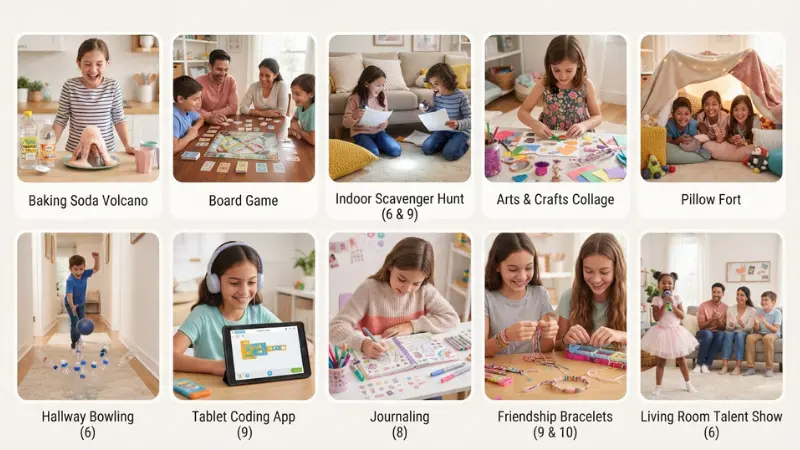
Simple experiments like a baking soda volcano or a homemade lava lamp bring science to life at home.
Kids learn cause and effect while having fun watching bubbles, fizzes, and colors mix. Most experiments use everyday kitchen items, making them easy and affordable to try.
Board Games
Classic board games like checkers, Monopoly, or Uno are perfect for a rainy afternoon. They teach patience, strategy, and good sportsmanship, win or lose.
Board games also give the whole family a reason to gather around the table and unplug for a while.
Indoor Scavenger Hunt
Write a simple list of household items or clues and send your kids on a search around the house. This activity keeps them moving, thinking, and problem-solving—and you can easily adjust the difficulty by age.
Arts and Crafts Projects
Set out paper, glue, scissors, and old magazines for an open-ended craft session. Kids can make collages, greeting cards, or paper models.
Craft time builds creativity and fine motor skills while giving them something to be proud of afterward.
Building Forts
Blankets, chairs, and couch cushions can quickly become an epic pillow fort. Kids love designing their own “secret hideout,” and it can turn into a reading nook, a pretend camping trip, or a cozy movie spot for the rest of the day.
Indoor Bowling
Set up empty plastic bottles as pins and use a soft ball to bowl them down in a hallway. This active game is easy to set up, safe for indoors, and keeps energetic kids happily busy for a while.
Coding and Puzzle Apps
For older kids, simple coding games or logic puzzle apps turn screen time into brain-building time. Many free apps teach real coding basics through fun, colorful challenges that feel more like games than lessons.
Journaling or Comic Drawing
Give your child a notebook and ask them to write about their day or draw their own comic strip. This activity builds writing and drawing skills while giving them a creative outlet that’s entirely their own.
Friendship Bracelet Making
Teach your child a simple knotting pattern using embroidery thread to create colorful friendship bracelets.
This activity improves patience and fine motor skills, and kids love having something handmade to gift a friend or sibling once the rain finally stops.
At-Home Talent Show
Let each family member prepare a short act — a joke, a dance, a song, or a magic trick — and put on a talent show in the living room.
This activity builds confidence and turns a rainy evening into a memorable, laughter-filled event for the whole family.
Educational & Learning Activities
Rainy days are a great chance to sneak in some learning without it feeling like schoolwork. Try flashcard games, simple math scavenger hunts, or a family trivia round based on your child’s favorite subject.
Letter and number puzzles work well for younger kids, while older kids might enjoy a word-building game like Scrabble Junior. The goal is to keep learning light and playful, not like a test.
When kids feel curious instead of pressured, they naturally want to keep exploring — and that curiosity is exactly what carries them into the next fun activity on this list.
Creative & Artistic Indoor Activities
Nothing beats a rainy day for bringing out the paints, crayons, and craft supplies. Set up a simple art station with paper, watercolors, and stickers, and let your child’s imagination lead the way.
Painting, drawing, and collage-making help kids express feelings they might not have words for yet. You don’t need to guide every step—sometimes the best masterpieces come from free, open-ended creating.
Keep some old shirts on hand for easy cleanup, and don’t be surprised if your fridge gallery grows a little fuller by the end of the day.
Sensory Play Ideas for Toddlers and Babies
Little ones learn best through touch, sound, and movement, which makes sensory play perfect for rainy days. Try a bin of dry oats, a bowl of water with cups for pouring, or homemade playdough scented with vanilla.
These simple setups keep babies and toddlers curious while gently building coordination and focus. Sensory play can also calm restless little ones, making it a great activity right before nap time.
Best of all, most sensory bins use items you already have at home, so you don’t need a special trip to the store.
Fun Kitchen Activities (Cooking with Kids)
The kitchen turns into the best classroom on a rainy day. Let your child help wash vegetables, stir batter, or decorate cupcakes with sprinkles. Cooking together teaches counting, following instructions, and patience—all while creating a tasty reward at the end.
Even toddlers can help with simple, safe tasks like tearing lettuce or pouring pre-measured ingredients.
Beyond the practical skills, cooking together builds warm memories and often makes kids proud enough to ask, “Can we make this again tomorrow?”
Board Games and Family Bonding Activities
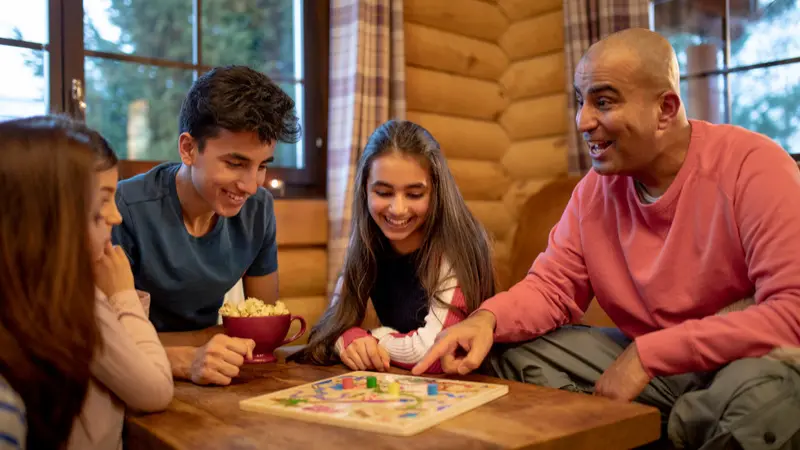
Few things bring a family together like gathering around a table for a game. Classic choices like Candy Land, Guess Who, or a simple card game like Go Fish work well for mixed ages.
Board games teach turn-taking, counting, and good sportsmanship, all wrapped in laughter and friendly competition.
For siblings who tend to argue, games with clear rules can actually reduce conflict by giving everyone a fair, structured way to play together. A rainy afternoon is the perfect excuse to dust off the game closet.
Screen-Time Friendly but Educational Options
Not all screen time is created equal, and rainy days are a good time to choose quality over quantity. Educational shows, read-along e-books, or simple coding apps can turn passive watching into active learning.
Look for programs that ask kids questions or encourage them to sing, count, or move along with the screen. Setting a clear time limit beforehand also helps avoid meltdowns when it’s time to switch to the next activity. Used thoughtfully, screen time can be one small, balanced part of a full rainy day.
Active Indoor Play (To Burn Energy)
Kids need to move, rain or shine, and indoor active play helps burn off restless energy before it turns into a meltdown. Try a mini dance party, “the floor is lava,” or a simple game of freeze dance.
Yoga poses named after animals—like “cat” or “downward dog”—are also a fun way to get little bodies stretching and giggling. These active breaks help kids sleep better at night and make the calmer activities on this list feel even more rewarding afterward.
Tips for Parents to Make Rainy Days Stress-Free
- Rotate Activities Every 20–30 Minutes
Kids, especially younger ones, have short attention spans. Switching activities before boredom sets in keeps energy positive and helps avoid meltdowns. - Prepare an “Activity Box” in Advance
Keep a box with craft supplies, small toys, and simple games ready to go. When rain shows up unannounced, you’ll have a ready-made plan in seconds. - Set Small Goals or Rewards
A simple goal, like finishing a puzzle or a craft project, gives kids something to work toward and a small sense of pride when it’s done. - Involve Siblings Together
Pairing siblings up for teamwork activities, like building a fort or a scavenger hunt, reduces boredom-driven arguments and builds their bond. - Keep a Flexible Schedule
Plan a loose mix of quiet and active activities rather than a strict hour-by-hour schedule. Flexibility keeps the day relaxed for both kids and parents.
Conclusion
Rainy days don’t have to mean cranky kids and endless screen time. With a little creativity — a box of crayons, a pile of blankets, or a simple kitchen project — you can turn a gray afternoon into one full of laughter and connection.
Save this list for the next time the forecast calls for rain, and don’t forget to subscribe to our newsletter for more parenting tips, activity ideas, and baby care essentials delivered straight to your inbox.
Frequently Asked Questions (FAQ)
What can I do with a 1-year-old on a rainy day?
Simple sensory play works best for 1-year-olds. Try a bin of soft textures, tummy time with a favorite toy, or peekaboo. Keep sessions short, since babies this age have very short attention spans.
How do I keep toddlers entertained without TV?
Rotate hands-on activities like playdough, block stacking, or bath-time play every 20–30 minutes. Toddlers stay happiest when they’re actively touching, building, or exploring something new.
What are cheap or free rainy day activities?
Many great activities use items you already own—pillow forts, kitchen dance parties, indoor scavenger hunts, and cardboard box crafts all cost little to nothing but deliver hours of fun.
How long should indoor screen time be for kids?
Most pediatric guidelines suggest limiting entertainment screen time to about 1–2 hours a day for kids over 2, with none recommended for babies under 18 months except video chatting. Choosing educational content makes screen time more worthwhile.
What age group benefits most from sensory bins?
Sensory bins work best for toddlers and preschoolers, roughly ages 1 to 5, since this is when hands-on exploration supports the most rapid growth in fine motor and cognitive skills.