
Traveling with a baby means packing snacks, diapers, and a hundred “what ifs” — and feeding your little one mid-flight shouldn’t be one of them.
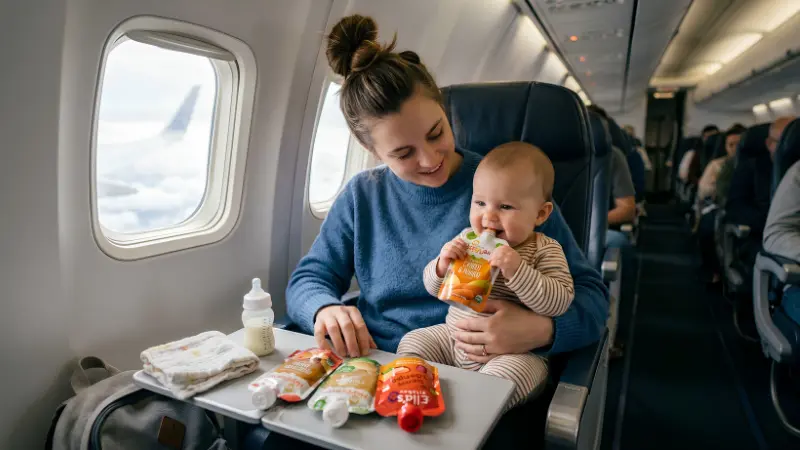
Yes, you can bring baby food pouches on a plane. The TSA lets you carry pouches, formula, and breast milk in reasonable amounts, even beyond the usual liquid limits.
In this article, we’ll cover the TSA rules for baby food pouches, how to pack them smartly, what happens at security, and simple tips to keep your baby fed and happy from takeoff to landing.
Does Baby Food Count as a Liquid When Flying?
Here’s where a lot of parents get confused. TSA’s standard carry-on liquid rule — the famous “3-1-1 rule” — limits liquids, gels, and aerosols to containers of 3.4 ounces (100ml) or less, all fitting in one quart-sized bag.
Baby food pouches are treated as an exception to this rule.
Officially, the TSA classifies baby food, formula, breast milk, and juice as medically necessary liquids for infants and toddlers. That means:
- You can bring more than 3.4 ounces per container.
- Pouches, jars, and purée cups are all allowed.
- You don’t have to fit them all into the quart-sized liquids bag.
According to the TSA’s official guidance, these items are permitted “in reasonable quantities” for the duration of your itinerary, meaning enough to cover your baby’s needs for the trip, including delays. You can double-check current rules directly on the TSA website before you fly, since policies can be updated.
TSA Rules for Baby Food Pouches: What You Need to Know
Let’s break down the actual rules so you’re not guessing at the checkpoint.
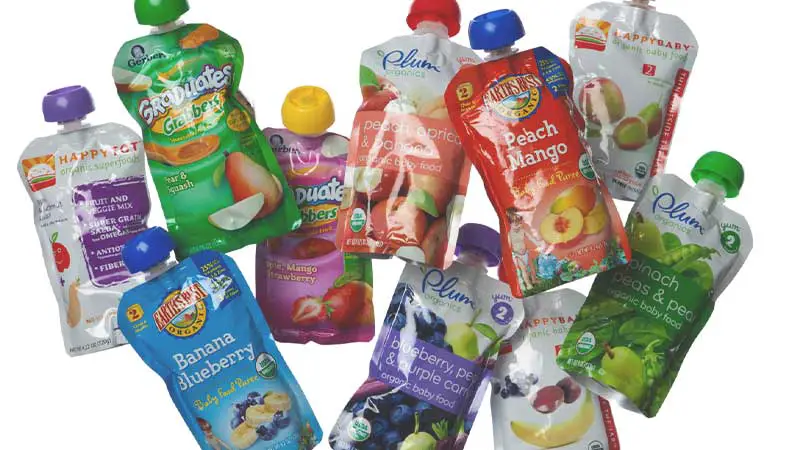
1. Declare Baby Food Separately
When you reach the security bin area, pull your baby food, formula, and any breast milk out of your bag and place them in a separate bin.
Let the TSA officer know you have baby food or formula that exceeds the standard liquid limit. This isn’t required everywhere, but it speeds things up and avoids confusion.
2. Expect Additional Screening
Because baby food pouches are exempt from the 3.4-ounce rule, officers may need to screen them separately. This can include:
- X-ray screening (pouches usually pass through fine)
- Opening a container for inspection
- Testing with an explosive trace detector strip
Tip: Officers may ask you to open one pouch to test it. This is normal and doesn’t mean you did anything wrong.
3. No Limit on the Number of Pouches — But Be Reasonable
There’s no hard cap on how many pouches you can bring, but TSA guidelines say quantities should be “reasonable” for your trip length.
Packing 40 pouches for a 2-hour domestic flight might raise questions, while a dozen pouches for an international trip is easy to justify.
4. Ice Packs and Freezer Packs Are Allowed Too
If you’re carrying refrigerated pouches or need to keep food cool, ice packs, gel packs, and frozen accessories are permitted, even if they’re not fully frozen at the time of screening.
How Much Baby Food Can You Bring on a Plane?
There’s genuinely no official ounce limit for baby food pouches, which is a relief compared to other liquids. That said, here’s a practical way to think about quantity:
| Trip Type | Suggested Amount |
| Short domestic flight (1–3 hrs) | 3–5 pouches + 1–2 backups |
| Long domestic flight (4+ hrs) | 6–8 pouches |
| International flight | Enough for the full flight + layovers + a buffer day |
A good rule of thumb many experienced traveling parents use: pack for double the length of your actual flight time. Delays happen, and a hungry baby on a stalled runway is nobody’s idea of a good time.
How to Pack Baby Food for a Flight (Without the Stress)
Packing baby food pouches for air travel isn’t complicated, but a little strategy goes a long way.
Choose Your Carry-On Wisely
Keep baby food pouches in your diaper bag or a dedicated carry-on, not checked luggage. Checked bags can be delayed, mishandled, or take hours to retrieve — not ideal when your baby is hungry mid-flight.
Organize for Fast Security Access
- Place pouches in a clear, resealable bag or pouch organizer so they’re easy to pull out.
- Keep them near the top of your bag, not buried under diapers and toys.
- Pack a few empty or half-used pouches separately if you plan to squeeze food onto a spoon rather than have baby suck directly from the pouch (this can reduce mess mid-flight).
Pack Smart Extras
- A bib or burp cloth for inevitable spills at altitude.
- A reusable spoon if your baby eats from a spoon rather than sucking the pouch.
- Wet wipes — cabin crews will thank you.
- A small trash bag for used pouches, since plane trash cans fill up fast.
Temperature Considerations
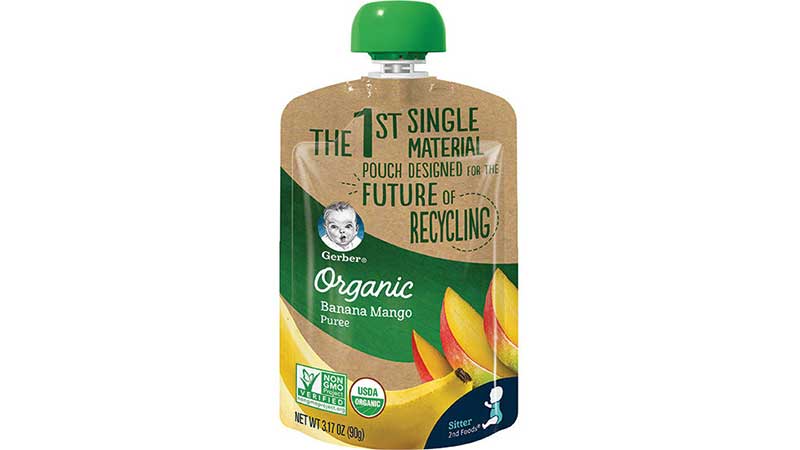
Most baby food pouches are shelf-stable and don’t need refrigeration until opened, which makes them one of the most travel-friendly baby food options out there.
If you’re bringing homemade purées instead, pack them in a small cooler bag with an ice pack (also TSA-approved).
Can You Bring Baby Formula on a Plane?
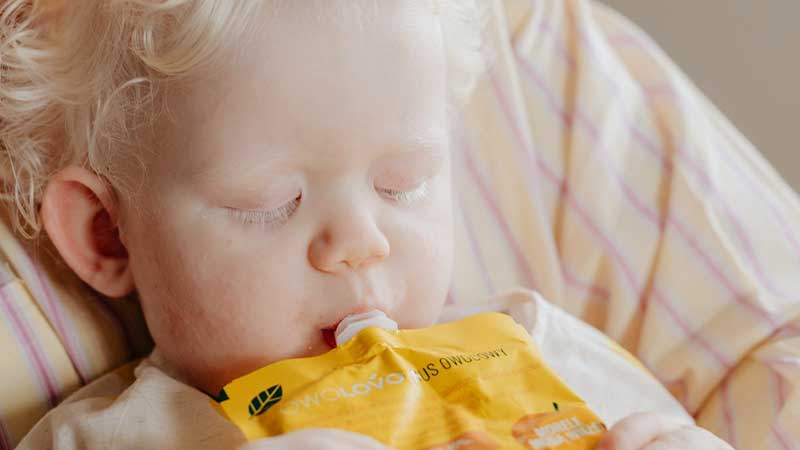
Yes — and the rules are nearly identical to baby food. Powdered formula, ready-to-feed formula, and concentrate are all allowed in carry-on bags, again in quantities reasonable for your trip.
A few extra notes for formula specifically:
- Powdered formula is easiest to travel with since it’s not a liquid until mixed. Pack pre-measured servings in small containers or use travel formula dispensers.
- Ready-to-feed formula in bottles or pouches is treated the same as baby food pouches — exempt from the 3.4 oz rule but subject to extra screening.
- You can also request hot water from the flight crew to prepare formula on board, which many parents find easier than carrying pre-mixed bottles.
Baby Food Pouches in Your Carry-On Bag: Best Practices
Since your carry-on is where baby food pouches will live during the flight, here’s how to make the most of that limited space:
- Use a separate pouch bag or pouch caddy so you’re not digging through diapers to find snacks.
- Bring a mix of textures — pouches for younger babies, plus soft finger foods (like puffs or teething biscuits) for older babies who can self-feed, which also helps with ear pressure during takeoff and landing.
- Pack one extra pouch per hour of expected travel time, including time at the airport before boarding.
- Label pouches by flavor or allergen if your baby has sensitivities, especially useful if a partner or grandparent is helping with feeding duties mid-flight.
Real Parent Experience: What Actually Happens at Security
Many parents share their honest experiences on how baby food pouches are handled at TSA checkpoints. The general consensus? It’s usually smooth, especially if you:
- Separate baby items into their own bin before reaching the belt.
- Speak up early: “I have baby food and formula that need separate screening.”
- Stay patient if an officer needs to test a pouch — it typically adds just a minute or two.
Some parents note that international airports outside the US may have slightly different processes, so if you’re flying internationally, it’s worth checking that country’s aviation security site or the airline’s guidance ahead of time.
Frequently Asked Questions
Do baby food pouches need to go in the quart-sized liquids bag?
No. Baby food pouches are exempt from the standard 3-1-1 liquids rule and don’t need to be bagged with your other liquids, though it’s smart to keep them in their own separate bag for easy screening.
Can I bring homemade baby food purées on a plane?
Yes, homemade purées are allowed under the same medically necessary liquid exemption as store-bought pouches. Pack them in leak-proof containers and consider a small cooler bag if refrigeration matters.
Will TSA make me taste my baby’s food?
Not usually. Officers may ask you to open a pouch for screening or run a swab test, but you generally won’t be asked to taste it. Occasionally, on international flights, additional testing steps can apply.
Is there a limit to how much baby formula I can bring on a plane?
There’s no strict ounce limit, but TSA expects quantities to be reasonable for your flight and any likely delays. Packing formula for the flight duration plus a buffer is a safe approach.
Can toddlers bring baby food pouches too, or just infants?
The exemption applies to children, not just infants. If your toddler still eats pouches, they’re covered under the same TSA guidelines.
Final Thoughts: Fly Confidently with Your Little One
Traveling with a baby already comes with enough moving parts — figuring out feeding shouldn’t be one of your worries. To recap: yes, you can bring baby food pouches on a plane, along with formula and breast milk, in quantities that make sense for your trip. TSA treats these as medically necessary items, so you’re not boxed in by the usual liquid restrictions.
The key is packing smart: keep pouches accessible in your carry-on, separate them at security, and bring a little extra just in case. Do that, and feeding time at 30,000 feet will be one less thing to stress about.
Got a flight coming up? Save this guide, pack your diaper bag the night before, and check the TSA’s official “What Can I Bring” page one more time before you head to the airport. Safe travels to you and your little one!